Shadow Alchemy, Integration, and the Wisdom of Descent
There are places on this earth that don’t just welcome you — they remember you.
You don’t arrive in them as a visitor. You arrive as someone being met. Not by people alone, but by land, water, rhythm, and something far older than story. This is what many people feel in Bali, often before they have language for it. A soft unravelling. A quiet exhale. A sense that the ground beneath you is not asking you to perform, fix, or prove — only to arrive honestly.
In the West, we are accustomed to landscapes that are passive backdrops to our ambition. We conquer mountains, we tame wildness, we build upon the land. But in places where the veil is thin, the land is an active participant in your becoming. In Bali, the humidity seems to carry a weight of presence, wrapping around you like a second skin, slowing the frantic pace of the Western mind down to the thrum of the jungle.
Bali is deeply healing not because it is beautiful, spiritual, or ritual-rich — though it is all of those things — but because it is integrated.
The spiritual is not separated from the human here. The unseen is not divorced from daily life. Devotion, grief, joy, ceremony, work, and rest coexist without hierarchy. You see it in the Canang sari (daily offerings) placed not just at temples, but at the feet of shop counters, on busy intersections, and atop computer servers. The sacred is not reserved for Sunday; it is the substrate of the Monday morning commute.
Here, nothing is bypassed. Nothing is idealised. Everything belongs.
And this is where many Western seekers misunderstand healing.
The Myth of Eternal Sunshine
We are taught, subtly and overtly, to seek the light — to rise above, transcend, overcome, heal and move on. We live in a culture of ascension. We applaud the soaring bird but fear the worm tilling the soil. Darkness is framed as something to escape, fix, or eliminate. We treat our shadows like a smudge on a mirror—something to be wiped away so we can see a “clean” reflection.
But the mirror isn’t dirty. The reflection includes the room behind you, the shadows in the corner, and the night sky out the window.
The truth most ancient cultures hold — including Bali — is that light without darkness is not wholeness, it is imbalance.
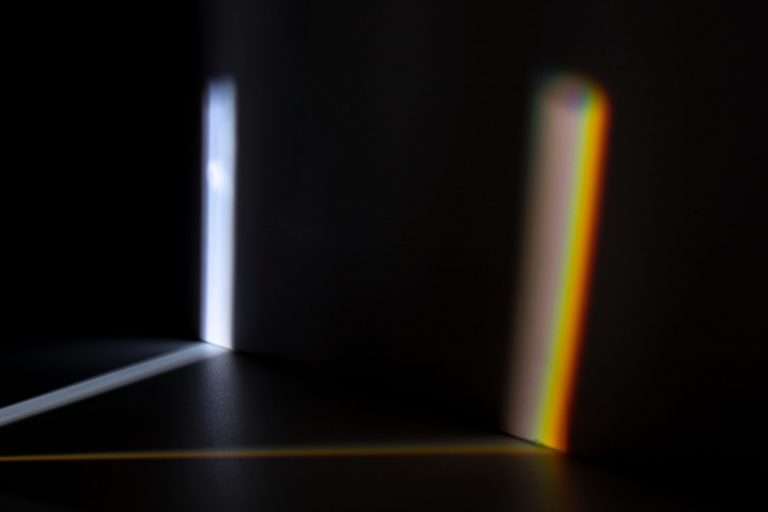
In Balinese philosophy, there is a concept known as Rwa Bhineda — the two opposites. It refers to the balance of light and dark, joy and sorrow, benevolent and malevolent forces. The goal is not to defeat the dark to let the light win; the goal is harmony between the two. If you eliminate the dark, you eliminate the contrast necessary for existence. A photo without shadows is just white exposure; it has no image, no depth, no story.
When we prioritise “love and light” to the exclusion of our pain, anger, or grief, we engage in spiritual bypassing. We build a penthouse of spirituality without ever pouring the foundation in the basement. Eventually, that structure collapses. True healing does not occur by avoiding the dark. It occurs by entering it with consciousness, extracting its truth, and returning with what the soul needs to integrate.
This is shadow alchemy.
The Mechanics of Shadow Alchemy
Shadow alchemy is not about living in pain, trauma, or perpetual excavation. It is not about identifying with wounds or making depth a form of worth. It is about recognising that within every shadow — every contraction, loss, rupture, and descent — there is information. There is intelligence. There is gold.
But gold is only gold once it is removed from the mine.
If you leave the gold in the rock, buried under tons of earth, it is technically valuable, but practically useless. It cannot be spent, worn, or used to conduct energy. Shadow work is the mining. Shadow alchemy is the refining.
Many of us are excellent miners. We are skilled at descending. We can map the contours of our childhood trauma, we can articulate the exact origin of our abandonment wounds, and we can speak the language of therapy with fluency. We know where the mine is. We spend years down there, chipping away at the walls of our psyche.
However, recognising the shadow is only the first step. The alchemy requires that we take the raw material of our suffering and transmute it.
For example, consider the shadow of Anger.
In its raw, unmined state, anger is destructive. It burns bridges, lashes out, and creates separation. A “light chaser” would try to repress this anger, meditate it away, or shame themselves for feeling it.
But the Shadow Alchemist enters the anger. They ask: What are you protecting?
They find that within the shadow of anger is the gold of Boundaries. The anger was simply the guard dog barking because the fence was broken. Once the gold (the boundary) is extracted and established, the anger (the barking dog) can settle down. The emotion is transmuted into structural integrity.
Consider the shadow of Grief.
In its raw state, it feels like drowning. It feels like the end of the world.
But within the shadow of grief is the gold of Capacity. The depth of your grief is the mirror image of your capacity to love. By entering the grief fully, without trying to rush through it, you expand the container of your heart. You become a person of greater depth, capable of holding space for others, capable of loving without the naive expectation of permanence. The grief transmutes into wisdom and gravity.
The Trap: Mistaking Descent for Destination
However, there is a distinct danger in this work, one that I see frequently in the conscious communities.
What many people get caught in — and what I myself have lived — is mistaking descent for destination.
The dark brings profound healing, especially when it holds what was repressed, silenced, or unacknowledged. It is intoxicating to finally touch the parts of ourselves we were told to hide. There is a rush in the release, a seduction in the tears. We can fall in love with our own brokenness because, for the first time, we are paying attention to it.
But when the psyche or identity becomes organised around depth alone, imbalance forms.
We begin to wear our trauma like a badge of honour. We bond with others through our wounds rather than our vitality. We confuse “processing” with living. We go to ceremony after ceremony, workshop after workshop, digging and digging, convinced that if we just find one more memory, one more trauma, one more ancestral curse, we will finally be free.
Insight keeps arriving, yet joy struggles to land. Clarity sharpens, but vitality thins. Healing continues, but life feels heavy.
This is the archaeological dig that never ends. We have dug up the entire city, catalogued every shard of pottery, brushed the dust off every bone, but we haven’t built a house to live in. We are standing in a pit of our own making, surrounded by artifacts of the past, wondering why we feel so cold.
The missing piece is not more work.
It is integration.
Defining Integration: The Architecture of the New
Integration is the unglamorous, essential, earthy phase of healing. It is the exhale after the scream. It is the silence after the gong.
If shadow work is the surgery, integration is the physical therapy. It is where the shadow’s message is embodied rather than revisited. It is where the question shifts from “Why did this happen?” to “What wisdom do I now live by?”
When we are stuck in processing, we are obsessed with the “Why.”
Why did my parents treat me this way? Why do I always attract unavailable partners? Why am I anxious?
The “Why” is necessary for understanding, but it is useless for change. You can know exactly why your car is broken, but knowing the mechanics of the engine failure does not drive you to the grocery store.
Integration asks “How” and “Who.”
How do I move now that I know this? Who am I becoming now that I am no longer protecting this wound?
Integration is where the nervous system recalibrates, not just the mind.
This is a crucial distinction. The mind can learn a new concept in an instant. You can read a book on attachment theory and understand it intellectually in a day. But the nervous system learns slowly. The nervous system is biological, primal, and rhythmic. It learns through repetition, safety, and felt experience.
When we integrate, we are teaching our bodies that the war is over.
We are moving from a state of hyper-vigilance (scanning for threats based on past trauma) to a state of presence (responding to the reality of the now).
What Integration Looks Like
Integration is rarely fireworks. It is usually quiet. It is the subtle shift in how you make your coffee, how you answer the phone, how you pause before saying yes when you mean no.
1. Boundaries arise organically.
Before integration, boundaries require immense effort. You have to hype yourself up to set them, you feel guilty after, and you ruminate on the reaction of the other person.
After integration, boundaries are simply a byproduct of self-knowledge. You don’t drink poison because you know it’s poison. You don’t engage in draining conversations because you can feel the somatic cost immediately. It’s not a fight; it’s a preference. Insight no longer needs intensity to arrive.
2. The story changes.
In the processing phase, we tell our story from the perspective of the victim or the survivor. “This happened to me.”
In the integration phase, the story becomes a chapter in a larger book. It is no longer the title of the book. You can talk about your past without your voice shaking, or perhaps you no longer feel the need to talk about it at all. The charge is gone. The gold has been extracted, and the rock has been discarded.
3. Behaviour changes without force.
Willpower is a finite resource. If you are using willpower to change a habit, you are fighting your own shadow. Integration dissolves the need for the habit.
For example, if you overwork to prove your worth (Shadow), and you integrate the truth that your worth is inherent (Gold), you don’t have to force yourself to stop working. You simply lose the drive to over-perform. The engine running that behaviour has been shut off.
4. A return to the ordinary.
The ultimate sign of integration is the ability to find the sacred in the mundane. When we are deep in shadow work, we crave the “highs” of breakthroughs. We want the sobbing on the floor, the shaking, the visions.
But an integrated life is about chopping wood and carrying water. It is about being fully present for a conversation with a friend, tasting your food, feeling the sun on your skin. It is the capacity to be bored without being anxious.
Bali Understands This Instinctively
This brings us back to the wisdom of this island. Bali understands integration not as a concept, but as a rhythmic necessity.
Ceremony here is not about catharsis for its own sake. It is about balance.
Witness the Melukat — the water purification ceremony. You go to the holy water temples, you pray, you offer your respect, and you stand under the gushing water. You scream, you cry, you let the cold shock of the water flush the debris from your subtle body.
But then? You get out.
You dry off. You put on dry clothes. You eat warm rice. You laugh with your friends. You get on your scooter and go home.
You do not live in the holy water temples. You do not stay wet and shivering, analysing the water.
Release is paired with reorientation. Clearing is followed by grounding. What is given to the water is not dragged back into daily life as identity. It is returned — and life is reorganised accordingly.
The Balinese know that we are porous beings. We accumulate “dust” (emotional residue, karma, energy) just by living. Cleansing is hygiene, not a medical emergency. You wash your body every day; you wash your spirit regularly. It is maintenance.
Westerners tend to treat healing like an exorcism—a one-time, massive event that fixes us forever. We want to do the “Big Work” so we can be “Done.”
Bali teaches us that there is no “Done.” There is only rhythm. There is the inhale and the exhale. The messy and the clean. The shadow and the light.
The Gold Standard of Healing
If you are currently in the thick of the descent, know that this is holy work. You are in the mine. Do not rush it. Do not let anyone shame you for the darkness you are navigating.
But remember to check your pockets.
Are you carrying the gold, or are you just carrying the rocks?
Are you building a life, or are you just deconstructing one?
The aim of Shadow Alchemy is not to become a professional miner. It is to become a wealthy soul — rich in wisdom, rich in compassion, rich in capacity.
Eventually, you must pack up your tools. You must climb out of the shaft, blink in the sunlight, and look at the world with eyes that have seen the dark and chosen, consciously, to love the light.
This is integration.
It is the moment the wound stops being a place you live and starts being a place you learned from.
It is the moment you stop healing and start living.
The ground beneath you is waiting. It doesn’t need you to be perfect. It doesn’t need you to be finished.
It just needs you to be here. Whole. Integrated.
Ready to begin.