Reclaiming Wholeness and the Art of Honest Self-Reflection
Bali has a way of cracking you open. It isn’t just the humidity or the scent of incense that hangs heavy in the air; it is the energy of the land itself. It is a place that demands honesty. It strips away the pretences we wear in our daily lives and asks us to look at what lies beneath.
I went to Bali with the intention to relax after what has been a relentless, challenging, enormous year of growth. As always Bali delivers what you ask for and more. As I sat in the tattoo chair to add two dragonflies to existing tattoos on my wrists—designs that already mapped the history of my resilience. I thought I was simply completing a visual aesthetic. I thought I was just “getting a tattoo.”
But the body keeps the score. As the needle buzzed and the ink settled into my skin, I wasn’t just marking my body; I was unlocking it. A realisation that had been dormant in my subconscious rose to the surface, bringing with it a flood of tears and a profound sense of clarity.
This blog isn’t about tattoos. It is about the heavy, holy work of Reclamation. It is about the moment we stop abandoning ourselves to fit into someone else’s narrative, and the peace that comes when we finally accept our own wholeness.
The Body as a Vessel for Truth
We often view healing as a purely cognitive process. We talk in circles in therapy, we journal, we analyse our pasts with the logical mind. We try to “think” our way out of trauma or “reason” our way into closure. While these are valuable tools, they often miss a crucial component: the somatic experience.
Our biography becomes our biology. Our secrets, our grief, and our unacknowledged truths live in our tissues. Sometimes, it takes a physical act—a ritual, a movement, or in this case, the sharp, grounding sensation of a tattoo needle—to bypass the mind’s defences and access the heart’s reality.
That afternoon, as the artist worked, I had a massive emotional release. It wasn’t a cry of physical pain. It was the sound of a wall crumbling.
I was hit with a wave of grief regarding a past relationship. In that chair, the confusion dissolved, replaced by a piercing realisation about what had actually transpired.
The Illusion of “Just Me”
In relationships, we often twist ourselves into pretzels trying to meet the needs of the other. We trim away the parts of ourselves that feel “too much” or “inconvenient,” hoping that if we just make ourselves smaller, we will fit.
We call this compromise, but often, it is self-abandonment.
The epiphany I had was this: In that past relationship, the expectation was that I would be “just me.” The desire was for a version of me that existed in a vacuum—a woman separate from her history, separate from her obligations, and most importantly, separate from her children.
I have two children. They are not accessories to my life; they are the weave of my fabric. The person I was with also had children, though he was estranged from them. In six years, I never met them. His model of existence was one of compartmentalisation—where a partner exists in one box, and family exists in another (or not at all).
He wanted me. But he wanted only me.
For a long time, I internalised his inability to embrace my full life as a deficit on my part. I wondered if I was doing something wrong, or if my life was too complicated. I carried the guilt of not being able to provide the isolated, singular focus he craved.
But as the dragonflies were etched onto my skin—symbols of transformation and seeing past illusions—I finally saw the truth.
I could never have given him what he wanted, because what he wanted required me to fracture myself.
He wanted a slice of the pie. I am the whole pie.
Healing Without Resentment
There is a distinct difference between realising a hard truth and drowning in resentment.
Resentment says: “How dare you ask me to be small?”
Conscious Awareness says: “I see now that you didn’t have the capacity for what I needed and desired. We were simply mismatched.”
This is a vital distinction in the healing process. When we stay in resentment, we are still tethered to the other person. We are drinking poison and expecting them to die. But when we move into conscious awareness, we liberate ourselves.
I realised that his desire for a child-free, isolated partnership wasn’t a malicious attack on me; it was a reflection of his own capacity and his own relationship with family.
Seeing this didn’t make me angry. It made me free. It allowed me to look at that chapter not as a failure, but as a lesson in boundaries. It taught me that I can never again entertain a connection that asks me to leave parts of myself at the door.
True intimacy requires the whole self. If I have to amputate my role as a mother, a creator, or a multifaceted woman to be loved, then that love is not for me.
The Anatomy of the Ink: A Visual Reclamation
Rituals are important. We need physical markers to commemorate internal shifts. The tattoos I completed that day serve as the bookends of my journey—a map of where I have been and a compass for where I am going.
1. The Purple & Green: The Armor of Integrity
On one arm, surrounded by watercolour splashes of purple and green, sits a sigil I designed during the most turbulent period of my life—my defamation trial.
When you are in the thick of a legal battle, when your character is being dissected and your voice is being stifled, you need armour. But not the kind of armour that shuts the world out. You need the kind that keeps your spirit in.
I designed this sigil based on specific pillars: Strength, Wisdom, Integrity, Freedom, Mind, Body, Soul.
It was my talisman. It was a way to look down at my arm when the world felt chaotic and remember, “This is who I am. This is my truth.” The purple and green represent the bruising of the battle, but also the lushness of new growth that comes after the rain.
2. The Red & Orange: The Fire of Transformation
On the other arm, the energy shifts. Glowing in red and orange, this piece features the Journey Home to Soul Sigil—another design of mine that has become central to my teachings.
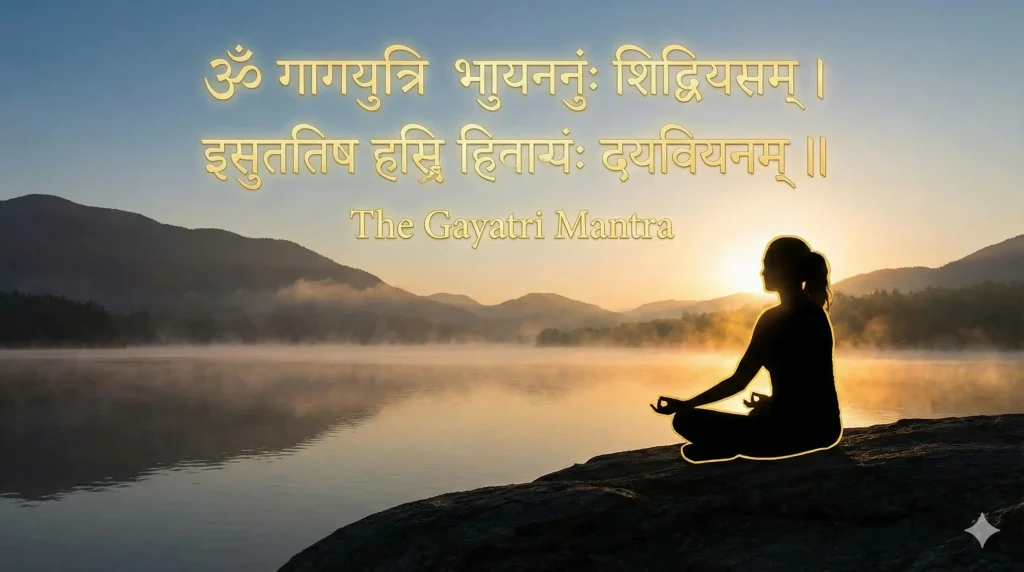
Beneath it lies the Gayatri Mantra in Sanskrit, which I had tattooed during a previous trip to Bali. The Gayatri Mantra is one of the oldest and most powerful Vedic mantras. It is a prayer to the Sun, asking for illumination of the intellect. It represents the removal of darkness and ignorance.
This side is the Fire. It is the active, burning force of transformation. It is the side of me that teaches, that leads, and that isn’t afraid to stand in the heat of the moment.
3. The Dragonflies: The Bridge Between Worlds
The recent addition—the reason for the tears—was the dragonflies.
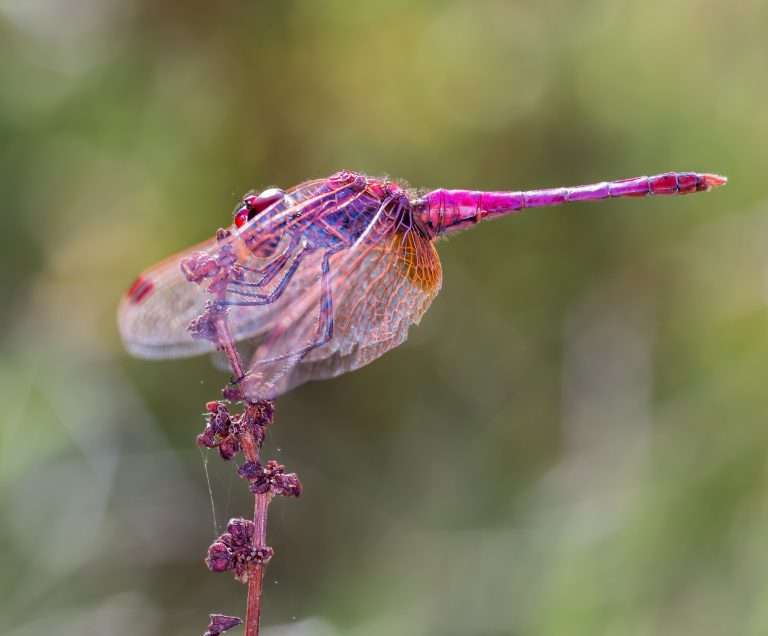
I didn’t choose dragonflies merely for their aesthetic beauty. In Bali, they are everywhere, buzzing with an electric, ancient energy. But symbolically, the dragonfly is the master of illusion.
Dragonflies start their lives in the water (the emotional realm) before they grow wings and take to the air (the spiritual/mental realm). They represent the ability to move between worlds. They represent the stripping away of the false self to reveal the authentic self.
By adding them to both wrists, I was bridging the gap. I was connecting the “Armour” of the trial to the “Fire” of my soul’s purpose.
They are also the face of my future. The dragonfly is part of my new logo and the symbol of the retreat I will run here in Bali. They are a promise to myself and the women that attend that we can always rise above the murky waters of our past emotions and take flight.
The Danger of Fragmentation
The reason this session felt like a “completion” is that I have spent years—like many of us—feeling fragmented.
We have the “Work Self,” the “Parent Self,” the “Partner Self,” the “Spiritual Self.” We shuffle between these identities, putting on different masks for different people. In my past relationship, I tried to wear the “Just Me” mask, hiding the “Mother” mask to keep the peace.
But the soul cannot thrive in fragmentation. The soul demands integration.
Journey Home to Soul isn’t just a catchy business name; it is the literal process of gathering up all these scattered fragments and bringing them home to the centre.
It is acknowledging the trauma of the trial and the triumph of the survival.
It is acknowledging the grief of the relationship and the joy of my children.
It is acknowledging the pain of the past and the excitement of the future.
When we try to hide parts of ourselves, we create a civil war within our own bodies. We exhaust ourselves trying to maintain the borders between who we are and who we think we should be.
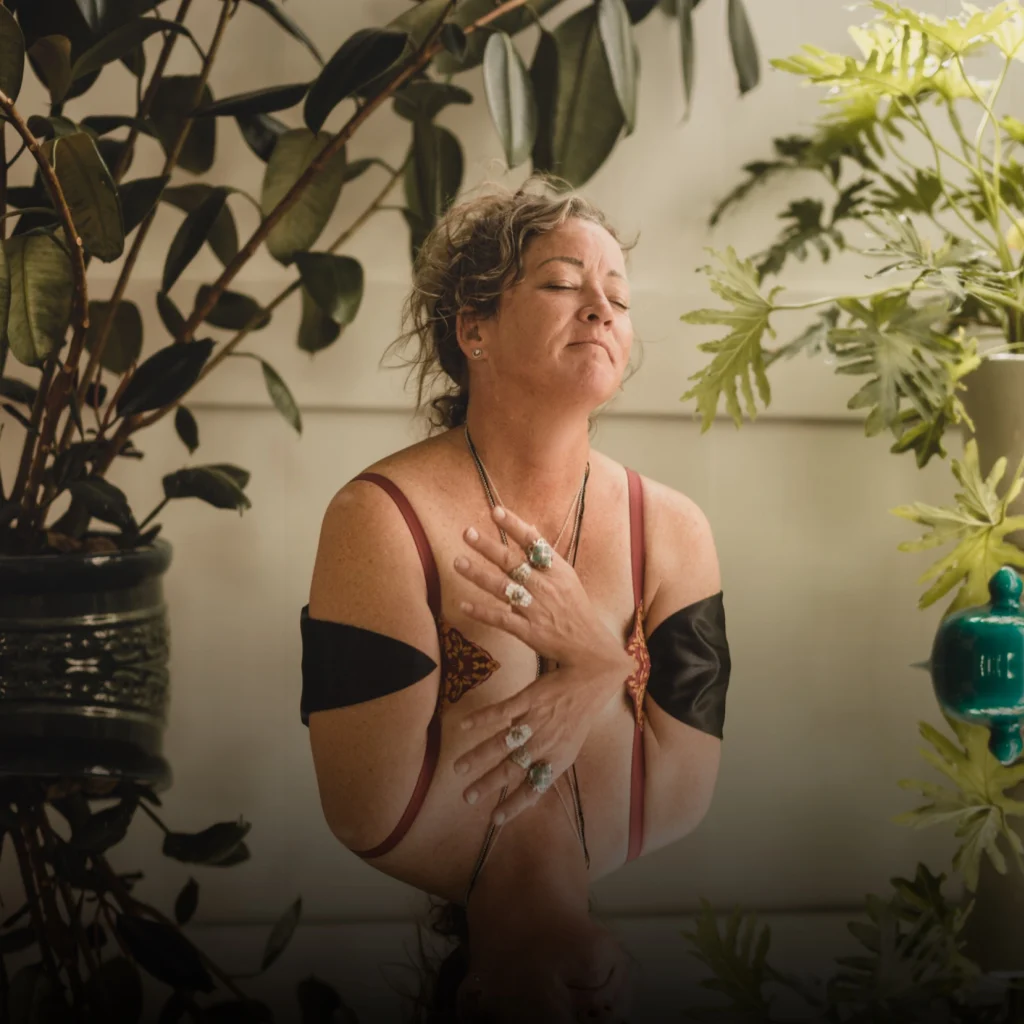
The moment I stood up from that tattoo chair, the war was over. I looked at my arms—purple, green, red, orange, ancient text, and winged creatures—and I saw a unified story. I saw a woman who is messy, complex, scarred, and vibrant. A woman who is a mother, a teacher, a survivor, and a visionary. A woman who is imperfectly perfect and finally chooses herself.
The Role of Conscious Awareness
How do we get to this place of acceptance? How do we look at a painful past without bitterness?
It requires Conscious Awareness.
Conscious awareness is the ability to observe your life without flinching. It is the ability to look at that ex-partner and say, “I see you. I see your limitations. And I see that your limitations do not define my worth.”
It is the ability to look at yourself and say, “I see where I abandoned myself to be loved. I forgive myself for that. And I choose differently now.”
This is the work I do with my clients. We peel back the layers. We look at the stories they have been told about who they are. We look at the scars they are trying to hide. And we work to integrate them.
Because here is the truth: You cannot heal what you do not acknowledge. You cannot reclaim a territory you are afraid to walk on.
A Visual Anchor for the Future
Both of these tattoos now serve as permanent, visual anchors for me. When I am teaching, when I am writing, or when I am simply having coffee in the morning sun, I catch a glimpse of a wing or a flash of red ink.
They are my reminders.
They remind me to always be true to who I am.
They remind me not to get caught in what others tell me I am.
They remind me that I am not a project to be fixed, or a part to be edited.
We live in a world that is constantly trying to tell us who to be. It tells us to be quieter, or louder, or younger, or less complicated. It tells us that our baggage is heavy and we should leave it behind.
But my “baggage” is my wisdom. My scars are my credentials. And my complexity is my power.
Closing the Chapter
There is a time for everything. A time to break, and a time to heal. A time to hide, and a time to be seen.
This trip to Bali was my time to be seen—by myself, primarily.
If you are reading this and you feel like you are twisting yourself to fit into a life that feels too small, or if you are hiding parts of your history to make someone else comfortable, I invite you to stop.
Take a breath. Look at your own “tattoos”—whether they are ink on your skin or invisible marks on your heart. They are not blemishes. They are the map of your survival.
Don’t apologise for the space you take up. Don’t apologise for the children you love, the battles you’ve fought, or the dreams you hold.
You are the whole pie. Don’t let anyone convince you that you’re just a slice.